By September 2028, Malawi will once again take stock of its people and homes to reveal how the nation has grown, where people live and the conditions they call home.
For millions, the exercise may feel like another government activity yet its numbers could determine where schools, hospitals, roads and services eventually go.
That is why the National Statistical Office (NSO) has started preparing communities, councils and traditional leaders for the country’s seventh Population and Housing Census (PHC) since independence.
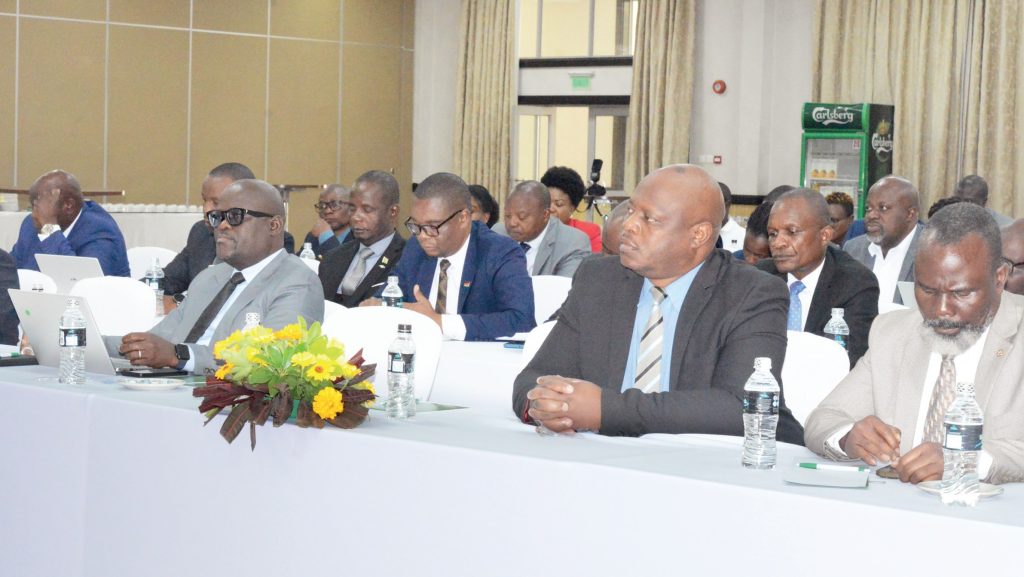
This week district officials from the Southern Region gathered in Blantyre to discuss reaching communities before census teams arrive at their doorsteps.
The meeting brought together district commissioners, planning directors, information officers, local government officials, lands officials, media representatives and other stakeholders from the southern region.
During the gathering, NSO had an opportunity to brief the officials on the census programme and discuss practical approaches to enhancing collaboration in disseminating key census messages and promoting public participation.
Behind the meeting and technical preparations is a country whose population has expanded dramatically, increasing pressure on land, housing and public services.
NSO commissioner of statistics Shelton Kanyanda says his office has intensified preparations with wider stakeholder participation to improve planning and data collection.
For district councils, the exercise is more than counting people as the resulting evidence will shape decisions about resources and development priorities.
During a recent National Statistical System (NSS) Steering Committee meeting in Salima Kanyanda said NSO wants all stakeholders to fully participate in the exercise to generate official data required by all sectors.
He said the census was a cross cutting national exercise whose results are used by all ministries, departments and agencies for planning and service delivery.
“They need the data from the census to be used in their respective ministries that’s why we want them to be involved fully in the preparations of the census, including formulating the questionnaires,” he said.
In 2018, the sixth PHC counted 17 563 749 people, meaning the current estimate is several million higher over eight years.
The difference is not a new census count, but it underlines why regular population measurement matters for planning a rapidly growing society.
The story becomes clearer when the 2008 census is placed beside the 2018 results and Malawi’s longer population history.
Malawi’s 2008 census counted 13 077 160 people, up from 9 933 868 recorded in 1998, with annual population growth reaching 2.8 percent.
The 2008 exercise was Malawi’s fifth post-independence census and continued the country’s participation in international decennial population counting programmes.
Conducted in June 2008, the census counted households, institutions and homeless people to establish a comprehensive population picture nationwide.
It also gathered housing information, allowing authorities to examine household conditions, dwelling structures, rooms, water sources, sanitation and household utilities.
Ten years later, the 2018 census revealed how quickly the national picture had shifted since the previous comprehensive population and housing count.
On the sidelines of the Blantyre stakeholders meeting this week, Nsanje District Commissioner Sandram Naluso said councils need reliable evidence because decisions become more effective when based on accurate information for development planning.
“As councils, we need to know what will be happening in our districts and when so that we can make informed, data-driven decisions,” Naluso said.
That argument becomes especially important as Malawi approaches 2028 with a population currently estimated at 21,201,635 people, according to NSO figures.
The figure is the NSO’s current population estimate, offering a striking picture of how much Malawi has changed since the last census.
According to the 2018 census report, the population was nearly four times the 1966 figure and about 1.3 times the 2008 population.
The 2018 census also marked a technological step, using electronic data collection and Geographic Information Systems to improve information gathering and management.
Kanyanda says the NSO has continued that technological direction, with artificial intelligence (AI) now being used during mapping ahead of 2028.
The mapping exercise will update geographical information, identify enumeration areas, verify settlements and physical features, and ensure complete geographical coverage.
If a settlement is missed on the map, people living there risk being missed during enumeration, weakening the information government uses for planning.
“That is why NSO is asking traditional leaders and local authorities to help mapping teams enter communities and receive cooperation from them,” says Kanyanda.
He says local leaders have a crucial role in mobilising communities, facilitating access to settlements and supporting mapping teams during fieldwork.
The appeal is particularly important where settlements are scattered, changing or difficult to reach, because complete coverage depends on local knowledge.
NSO has already engaged traditional authorities and council officials in various districts as mapping work progresses ahead of enumeration.
Today statistics show that the country’s population has risen from just over four million in 1966 to an estimated 22 million in 2026, reflecting an over 438 percent increase.
Various reports since the first PHC also show that the number of households has increased significantly from 1.1 million in 1977 to over five million by 2026.
Demographer and social statistician Professor Nyovani Madise observes that high population growth is principally due to persistently high fertility, although the average fertility per woman has fallen from seven in the 1960s-1990s to 3.85 per woman in 2022.
Madise, who is president of the Union for African Population Studies, notes that such high population growth rates mean that the population doubles every 25 years.
“Because of previous high fertility rates, we have created population momentum, which means that even with falling fertility rates, our population will continue to grow for the next 3 to 4 decades,” says Madise.
Social commentator Lucky Mbewe says accurate population figures are critical because Malawi has often operated with limited demographic information for planning.
He argues the census can reveal the distribution of children, youths and older people, helping government design programmes around different population groups.
“This census will help the nation to come up with relevant programmes to specific groups in terms of demographic dividends as you know the last time we had accurate data was in 2018,” he says.
Before the main enumeration, NSO plans a pilot exercise from September 1 to 21, 2027, allowing officials to test procedures.
The main census is scheduled for September 1 to 21, 2028, forming part of the Global 2030 Round of PHC. NSO has conducted population and housing censuses in Malawi since 1966.
“This big national headcount planned is not just about writing names in large books, but about helping ordinary families get better public services and support,” says another social commentator Felix Kaunda.
Governance and policy expert Mavuto Bamusi observes that population growth rate is significantly high and exerts pressure on the country’s resources thereby making sustainable development very problematic.
He states economic resources are under intense pressure such that the high population is pulling down economic growth.
For the country, the coming census offers another opportunity to measure a nation that has grown from four million people in 1966 to around 22 million in 2026.